How Many Sets per Muscle Group? Read the Weekly Total
how many sets per muscle group? Compare published ranges, separate reps from sets, and add a weekly example without confusing it with your target.
By Ultimate Fitness Tracker by Cosmo Suite · Editorial policy
Published · 7 min read
General information, not medical or fitness advice. Talk to a qualified professional.
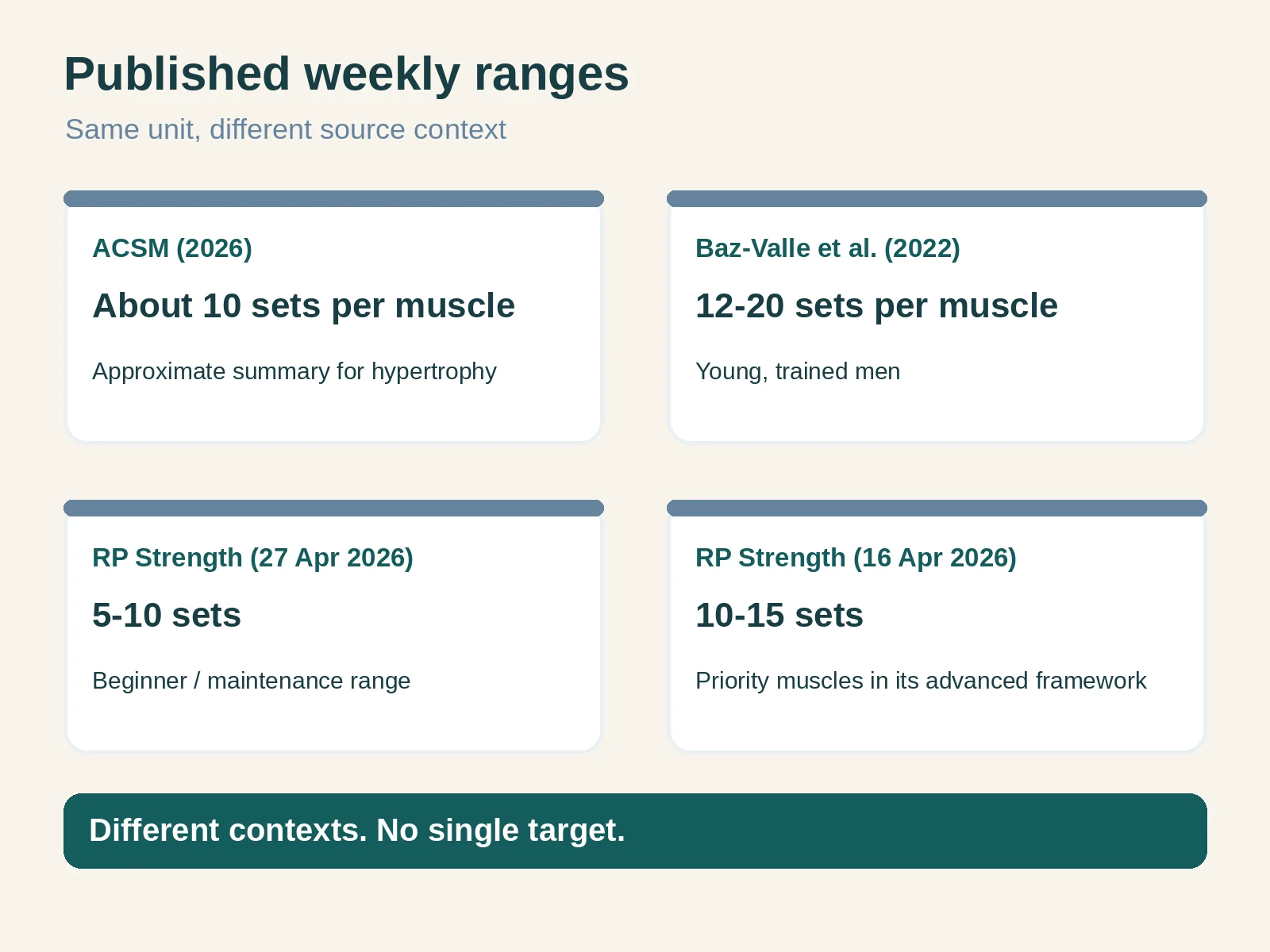
How many sets per muscle group should you count? Sources do not give one number for everyone. ACSM’s 2026 summary says about 10 weekly sets for hypertrophy. A systematic review suggests 12-20 for young, trained men. The first step is to read each number with its source and population.
This article compares published ranges and shows how to total sets from a log. The example uses made-up numbers for arithmetic only. It does not suggest how much to train. Ultimate Fitness Tracker’s Workout Planner is one place to record sets, reps, and weight together.
The Trend Line:
- Published ranges differ, so keep each number beside its source and population.
- A set count and a rep count describe different things.
- Choose one counting convention for your log and use it consistently.
- A weekly total records work. It does not tell you what your own target should be.
What the Numbers Say
The sources below do not give one interchangeable prescription. They describe different populations, goals, and levels of detail, so read each range with its source attached.
| Source | Published weekly range | Context in the source | What the number represents |
|---|---|---|---|
| ACSM's 2026 summary | About 10 sets per muscle group | General summary for muscle growth in healthy adults | An approximate headline figure |
| Baz-Valle et al. (2022) | 12-20 sets per muscle group | Suggested as a possible standard range for hypertrophy in young, trained men | A conclusion from a systematic review, with a defined population |
| RP Strength (27 April 2026) | 5-10 sets | Its article labels this a beginner or maintenance range | A coaching publisher's framework |
| RP Strength (16 April 2026) | 10-15 sets for priority muscles | Its advanced-lifter section; the article also gives other volume bands | A different coaching framework, not a general standard |
| BodySpec (31 July 2026) | 12-20 in its overview | The same page's table lists 8-12 novice, 12-20 intermediate, and 20-30+ advanced | One explainer uses more than one framing |
These figures are not a ladder you need to climb. The 2022 review's 12-20 statement is specifically about young, trained men. ACSM's newer summary uses the approximate figure of 10. The coaching articles and BodySpec organize ranges differently. None of those facts tells you what an individual should do.
How do you count sets per muscle group?
A weekly set total is the sum of the sets you record under a muscle group during your selected week. Before adding, decide what your log means by a set and how you assign exercises to muscle groups.
A basic entry can keep three fields together: date, exercise, and completed sets. If you record reps and weight too, retain them as separate fields. The set count is not the same as the total repetitions or the load moved.
Pick a week boundary and write it beside the total. You might use Monday to Sunday or a rolling seven-day window. Those windows can group different sessions, so label the dates you included. Anyone reading the total should be able to tell which entries contributed to it.
Compound exercises can involve more than one muscle group. Sources and programs may count secondary muscles differently, including partial credit or no separate credit. There is no universal convention in the sources above. For a personal log, write the method you chose in a note and apply it the same way each week.
For example, you might total only the muscle group named as the main target in your own plan. That is a tracking rule, not a claim that other muscles were inactive. If you need a program-specific count, follow the method used by the coach or source whose numbers you are comparing.
Compare entries only when the muscle group, counting rule, and time window match. If one changed, note it beside the total. That explains a difference in the record without rating the change.
A lifting log that records effort beside sets, reps, and weight can keep those details distinct. The effort field describes a separate observation; it does not change the arithmetic of the set total.
Is 4 sets of 12 reps the same as 12 sets?
No. Four sets of twelve reps means four sets, with twelve repetitions in each set. It is not twelve sets. Reps describe the repeated actions inside a set; sets describe how many rounds were recorded.
The phrase “4 sets of 12” also leaves out the time unit. It might describe one exercise in a session. A weekly muscle-group total could include sets from several exercises and sessions, according to the counting convention being used.
| Log entry | Sets | Reps per set | Total reps shown | Weekly muscle-group total? |
|---|---|---|---|---|
| Example: exercise A | 4 | 12 | 48 | Not by itself; the log still needs its muscle-group rule and week |
| Example: exercise B | 3 | 8 | 24 | Add only if it belongs in the chosen category |
The arithmetic in the “total reps” column is sets multiplied by reps per set. It does not convert reps into sets. Keeping those columns separate prevents a session entry from looking like a weekly total.
What does the 3-3-3 rule mean?
The term “3-3-3 rule” has differing descriptions, so the phrase alone does not identify a standard number of sets per muscle. A 4 September 2026 explainer says versions include three training days, three exercises per workout, and three sets per exercise, while noting that the label is not standardized.
That description counts sessions, exercises, and sets at different levels. It still does not say how often each muscle is worked, which exercises count for a muscle, or how the week is defined. Other uses of the same phrase may refer to a different routine. Check the source's own definition before comparing it with a set total.
A memorable label can help someone remember a routine, but it is not a measurement method. If your question is “how many sets per muscle group?”, record the actual sets and the category rule instead of relying on the name of a routine.
How can you total a week from a workout log?
Add the set counts from the entries that fit your stated rule, then label the result with the week and category. Here is example data only. The exercise names are placeholders, and the total is not a suggested amount.
| Example data only | Sets recorded | Running total for this example |
|---|---|---|
| Monday, exercise A | 3 | 3 |
| Monday, exercise B | 2 | 5 |
| Thursday, exercise C | 4 | 9 |
| Saturday, exercise D | 2 | 11 |
The arithmetic is 3 + 2 + 4 + 2 = 11 logged sets. This illustration assumes every listed entry belongs in the same category under the writer's chosen convention. It does not establish that 11 is low, high, or suitable for anyone.
When you review a log, check for missing sessions, duplicated entries, or a week that starts on a different day than usual. Those are recordkeeping checks. They help explain a change in the total without turning it into an instruction.
What can a weekly set total tell you?
A total can show how much work your log contains under one definition. On its own, it cannot tell you whether a number is right for a specific person or predict a result.
It also cannot compare two programs fairly if they count sets differently. One may count only a muscle's main-target exercises, while another gives partial credit for exercises involving it secondarily. The arithmetic may be correct in both logs even when the totals are not directly comparable.
If you keep a record, preserve the pieces that explain the number: dates, exercises, set counts, and your counting note. Some lifters also track reps, weight, or an effort rating. For a separate example of tracking, the weight loss tracker template post shows how measurements and trend data can be kept in distinct fields.
Why Trust This Article
We are the Ultimate Fitness Tracker team that built the spreadsheet's Workout Planner. We checked the sources linked here on 16 October 2026 and kept the population qualifiers attached to the ranges. The example table is arithmetic made from explicitly fictional entries. It does not report user results or prescribe a program.
This is about tracking, not medical advice. Talk to a doctor about your health. If you need individual training guidance, speak with a qualified professional. Our about page explains who publishes the site, and the editorial policy describes how we prepare and correct articles.
Where Ultimate Fitness Tracker Fits
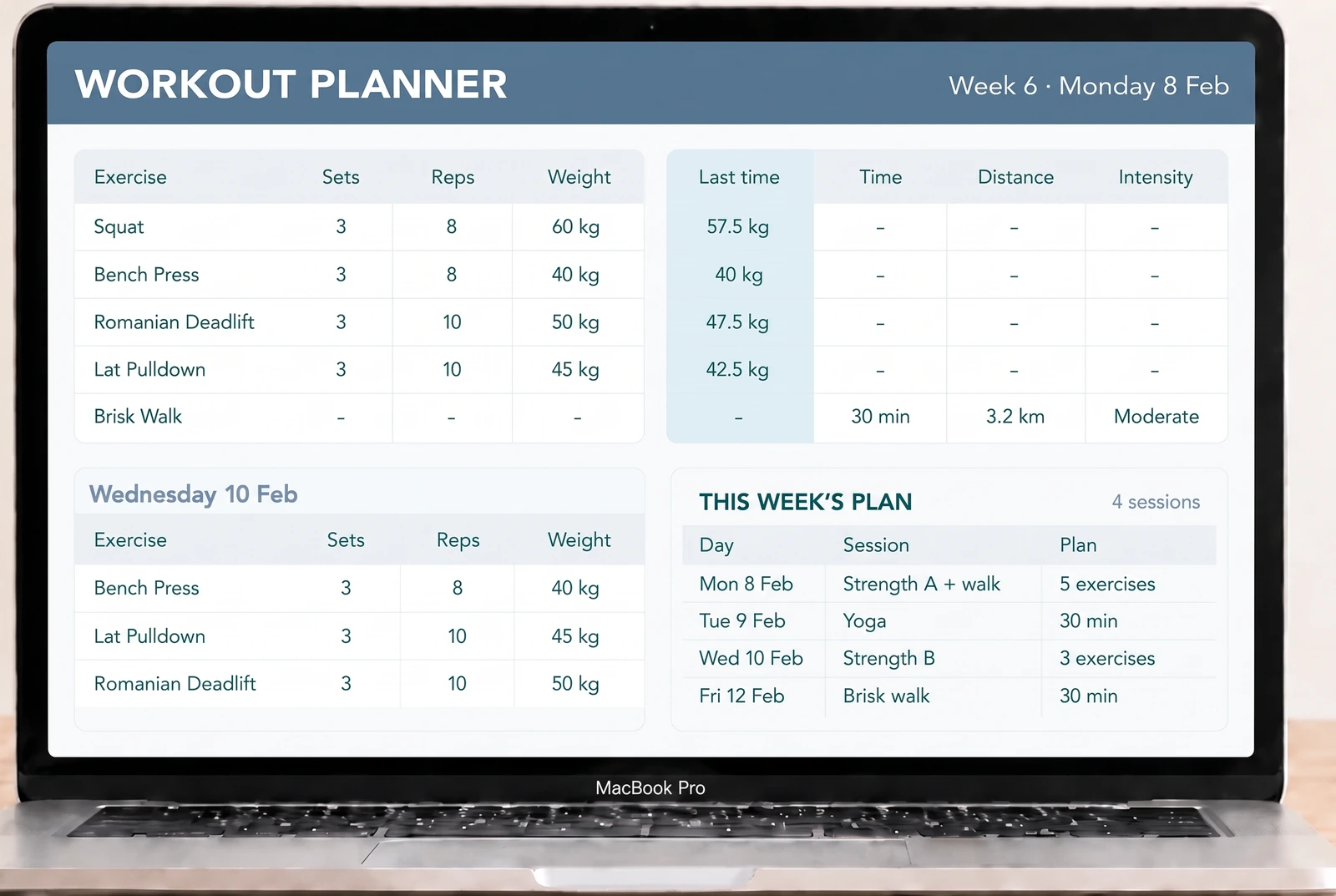
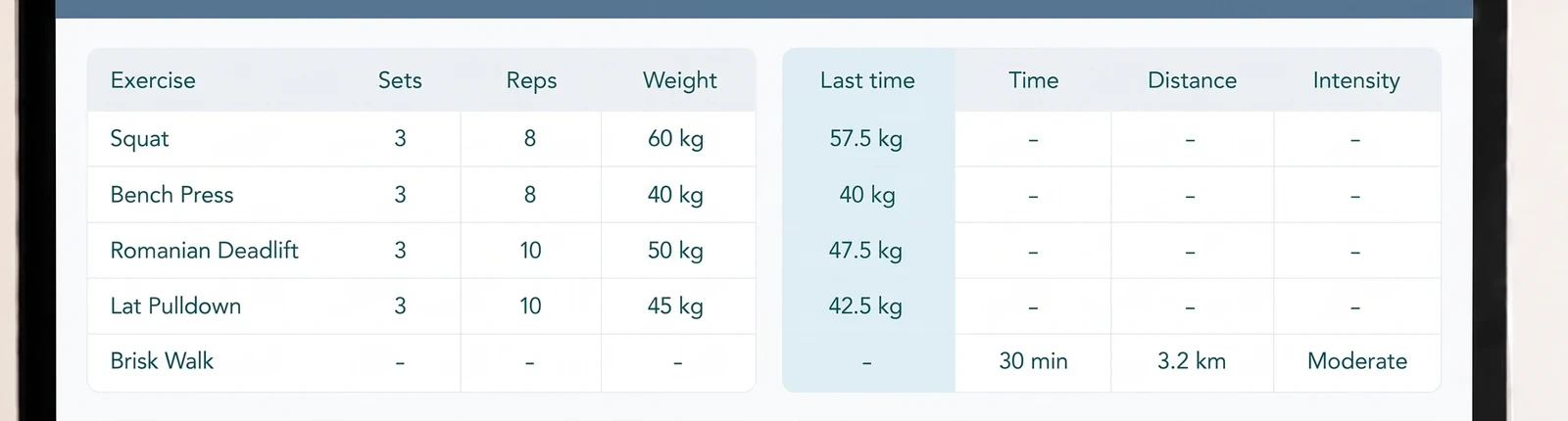
Ultimate Fitness Tracker includes a Workout Planner tab for recording exercises, sets, reps, weight, time, distance, intensity, and what you lifted last time. It is part of a spreadsheet in Google Sheets and Excel. The feature list describes what the file records; it does not recommend a weekly number.
If a ready-made file is useful, Ultimate Fitness Tracker keeps weigh-ins, measurements, and workout entries together. You can also review the weight loss tracker spreadsheet overview to see how its tracking tabs are organized.
Frequently asked questions
Is 10 sets per muscle group a week enough?
It depends on the source and the person. ACSM's 2026 summary says about 10 weekly sets per muscle group for hypertrophy. A 2022 review reports 12-20 for young, trained men. Both summarize groups of people. Keep that context beside each number; neither source picks an individual target.
Does one set mean one exercise?
No. A set is one completed round of an exercise. One exercise can have several sets. A weekly muscle-group total adds the sets you classify under that muscle across sessions. Keep the exercise name beside the count so you can see what went into the total.
Do warm-up sets count in a weekly total?
Check the counting rule used by your program or source. If your log includes warm-up sets, label them so they are easy to separate from other entries. Use the same rule each week. Then a change in the total reflects the entries you recorded, not a change in how you count.
Is 3 or 4 sets better?
The count depends on its unit. Three or four sets might describe one exercise, one session, or a whole week. Those totals answer different questions. Sources also frame weekly volume differently, so write down whether you are counting an exercise, session, or full week before comparing numbers.
What is the 3-3-3 rule?
The phrase has more than one published explanation. One recent explainer uses three training days, three exercises per workout, and three sets per exercise, then notes that the term is not standardized. That version does not define a universal weekly set count for each muscle group.
How do I track sets across a week?
Record the date, exercise, and completed set count for each session. Add entries under a stated muscle-group rule and check the total at the end of your chosen week. Label example data and published ranges clearly. That keeps them separate from a personal target.
Sources
- ACSM: 5 Things to Know About Creating an Effective Resistance Training Plan, 17 March 2026
- Baz-Valle et al.: A Systematic Review of the Effects of Different Resistance Training Volumes on Muscle Hypertrophy, 2022
- RP Strength: Training Frequency Decoded, 27 April 2026
- RP Strength: How Beginners, Intermediates, and Advanced Lifters Should Train Differently, 16 April 2026
- BodySpec: How Many Sets per Muscle Group? Weekly Volume Guide, 31 July 2026
- Fitness Image: What Is the 3-3-3 Rule Gym?, 4 September 2026