What to Do at the Gym in Week One: The Log You Start
What to do at the gym in week one? Choose four movement patterns, write down sets, reps and weight each visit, and let that record set your next session.
By Ultimate Fitness Tracker by Cosmo Suite · Editorial policy
Published · 8 min read
General information, not medical or fitness advice. Talk to a qualified professional.
What to do at the gym in week one comes down to a short, repeatable list. Two or three visits, one movement for each of four patterns, and a written record of what you did. Gold's Gym suggests a full-body routine of three sets of eight to twelve reps for a squat, a push, a vertical pull and a horizontal pull. Nerd Fitness builds the first visits in levels, from walking a lap to three circuits of wall push-ups and bodyweight squats. Both guides list exercises and neither hands you a page to fill in, which is why many first weeks blur together: by the second visit, the weight, the machine setting and the number of reps are gone. This guide covers the session shape, the two rules people call 2-2-2, and the fields to write down so week two starts from a number instead of a guess.
The Trend Line:
- Train two or three times in week one, with a rest day between sessions.
- Cover four patterns: squat, push, vertical pull and horizontal pull.
- Write the exercise, weight, sets and reps every visit, in the same fields.
- Treat week one as the first row of a record, not a test you can fail.
What the Numbers Say
The figures below come from two gym guides, one equipment publisher and the CDC's adult activity guidance, which sets the public health floor rather than a training plan. Each number is a starting point, not a target you owe anyone.
| Number | What it tells you | How often to check |
|---|---|---|
| 2-3 sessions a week | Gold's Gym's beginner frequency, with at least one rest day between strength sessions | Once, when you plan the week |
| 4 movement patterns | Squat, push, vertical pull and horizontal pull cover a full body in one session | Each session |
| 3 sets of 8-12 reps | Gold's Gym's template for each movement in that routine | Each set |
| 60-90 seconds | The rest Gold's Gym suggests between sets | Each set |
| 2 extra reps in 2 sessions | The 2-for-2 trigger for adding load | After each session |
Read the table as a shape for the week. A beginner who completes two sets of ten on three movements has done the session, and the count of sets matters less than the record of them.
What do you do at the gym as a beginner?
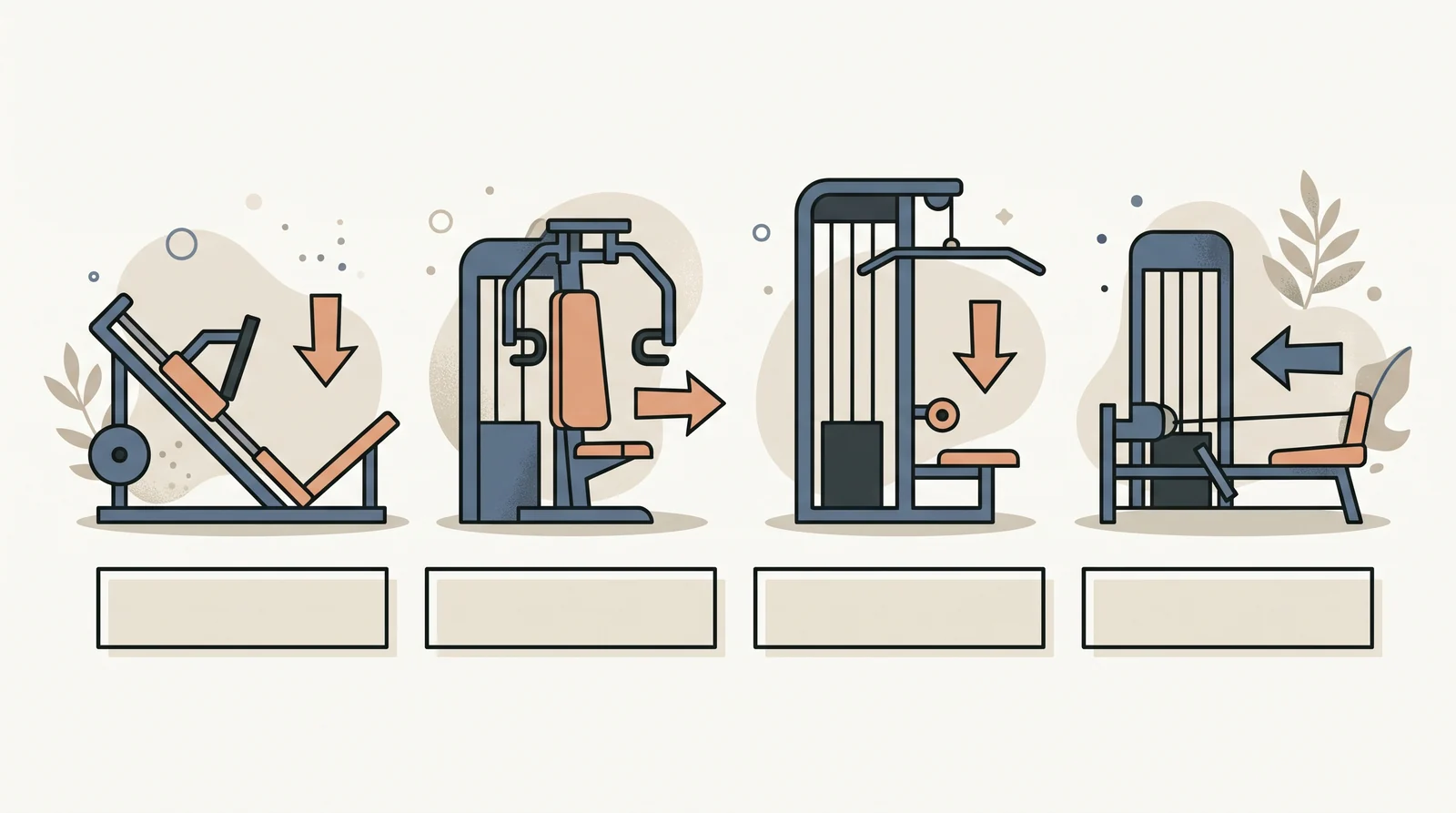
You warm up, work through a short full-body session, cool down, and write it down. Gold's Gym suggests a warm-up of five to ten minutes, with three to five minutes of easy cardio and dynamic stretches such as leg swings and arm circles. Its beginner routine then covers four patterns: a squat, a push, a vertical pull and a horizontal pull. Each gets three sets of eight to twelve reps. For the core it adds a plank of twenty to forty seconds, or ten to fifteen controlled crunches.
Nerd Fitness takes a gentler route. Its first level is to walk a lap of the room and do the warm-up stretches. The second adds fifteen minutes of walking. The third adds three circuits of ten wall push-ups and ten bodyweight squats. Its advice is to repeat a level until it feels comfortable, then move on.
The two guides differ in how fast they load the first week but agree on the structure: a few patterns, repeated, with rest days between sessions. Gold's Gym suggests training two to three times a week, and Nerd Fitness suggests working up to three times a week on a Monday, Wednesday, Friday pattern.
Pick the version you will actually repeat. A short session you finish and record beats a long one you abandon in week two.
Which movements go in the four patterns?
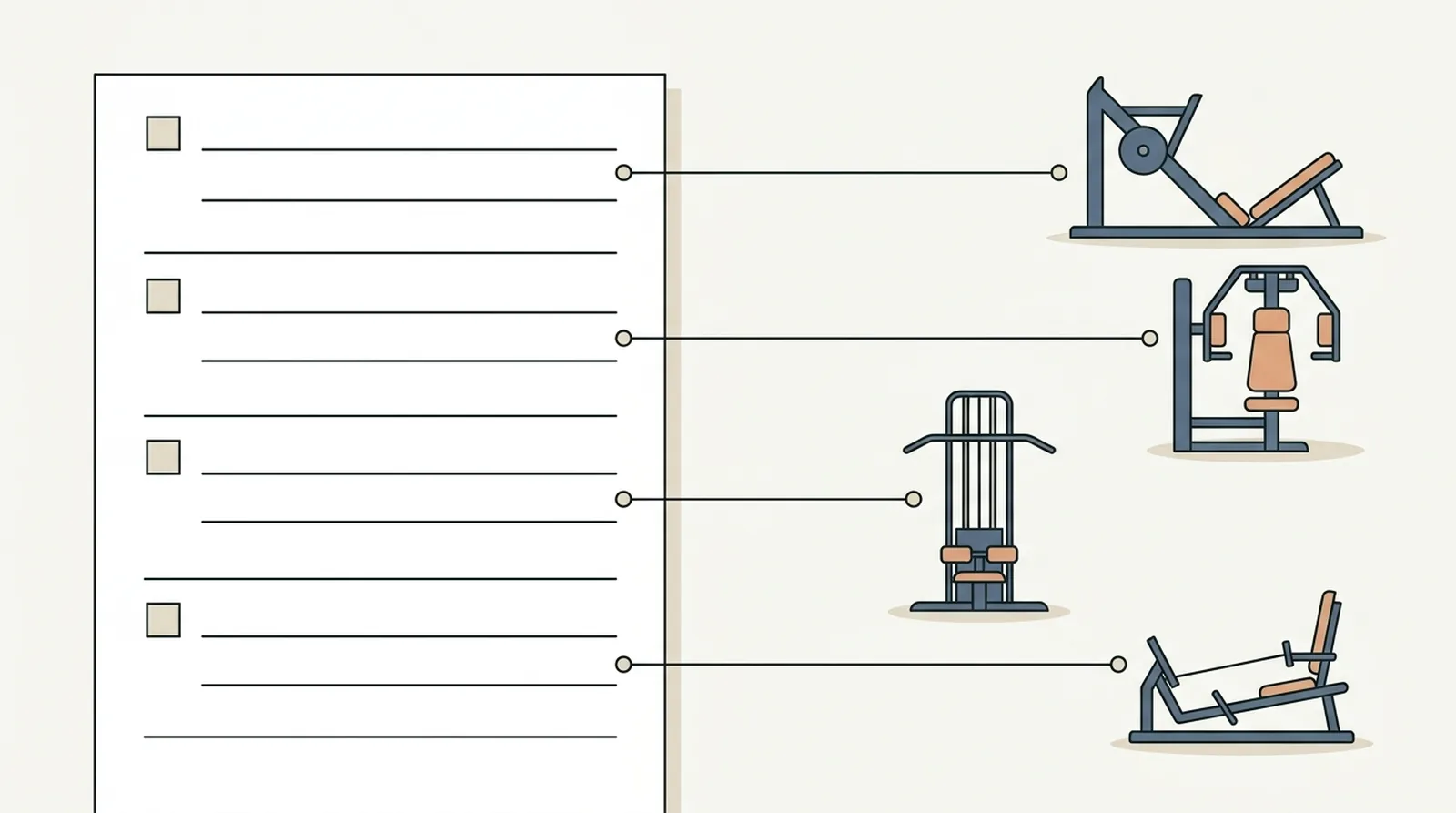
Any movement you can name and repeat will do. The pattern matters more than the machine, because it decides which rows in your log you will compare later.
- Squat: a leg press, a goblet squat with a dumbbell, or a bodyweight squat.
- Push: a chest press machine, a dumbbell press, or a wall push-up.
- Vertical pull: a lat pulldown, or an assisted pull-up.
- Horizontal pull: a seated row, or a bent-over row with a light dumbbell.
Write the exact name and the setting you used. "Chest press, seat 4" is a better row than "chest", because it tells you what to repeat. A workout log that keeps the previous entry beside each exercise turns those names into a comparison you can read at a glance.
What is the 2-2-2 rule in the gym?
The phrase names two different rules, and the confusion is worth clearing up before you use either one. The older rule is about adding weight, while the newer one is a training format that became popular in late 2025.
The 2-for-2 rule is a progression trigger. Skelcore's guide, published on 14 December 2025, says to increase the load when a lifter completes two extra reps beyond the target on the last set, for two consecutive workouts. It is a rule about when to change a number, and it only works if you have the last two sessions written down.
The 2-2-2 method is a training split. Lifehacker set out the definition on 15 December 2025: two full-body workouts per week, two working sets per exercise, and two reps in reserve on each set. It is a way to organise a week, not a rule for adding weight.
The same article adds a warning that matters in week one. "Reps in reserve" assumes you can tell how many reps you had left, and a beginner often stops too early because the signal is unfamiliar. So the third 2 is the part of the method that needs the most practice, and the part a log can help you learn: write the reps you did, and the estimate gets better with each session.
| Rule | What it changes | What you need in the log |
|---|---|---|
| 2-for-2 | The load on the bar or machine | Reps completed in the last set, for two sessions |
| 2-2-2 method | The number of sessions and sets in a week | Session dates, exercises, set count, effort |
The two can sit in one record without conflict. A 2-2-2 week gives you two sessions to compare, and the 2-for-2 rule tells you when the second session earned a heavier load. Neither is a standard, and neither says what your numbers should be. They are conventions for reading a log, and a convention only helps if you keep the fields it needs.
A weekly set total per muscle group is a separate count again, which is why the label on your columns matters more than the label on the method.
What should week one look like in a log?
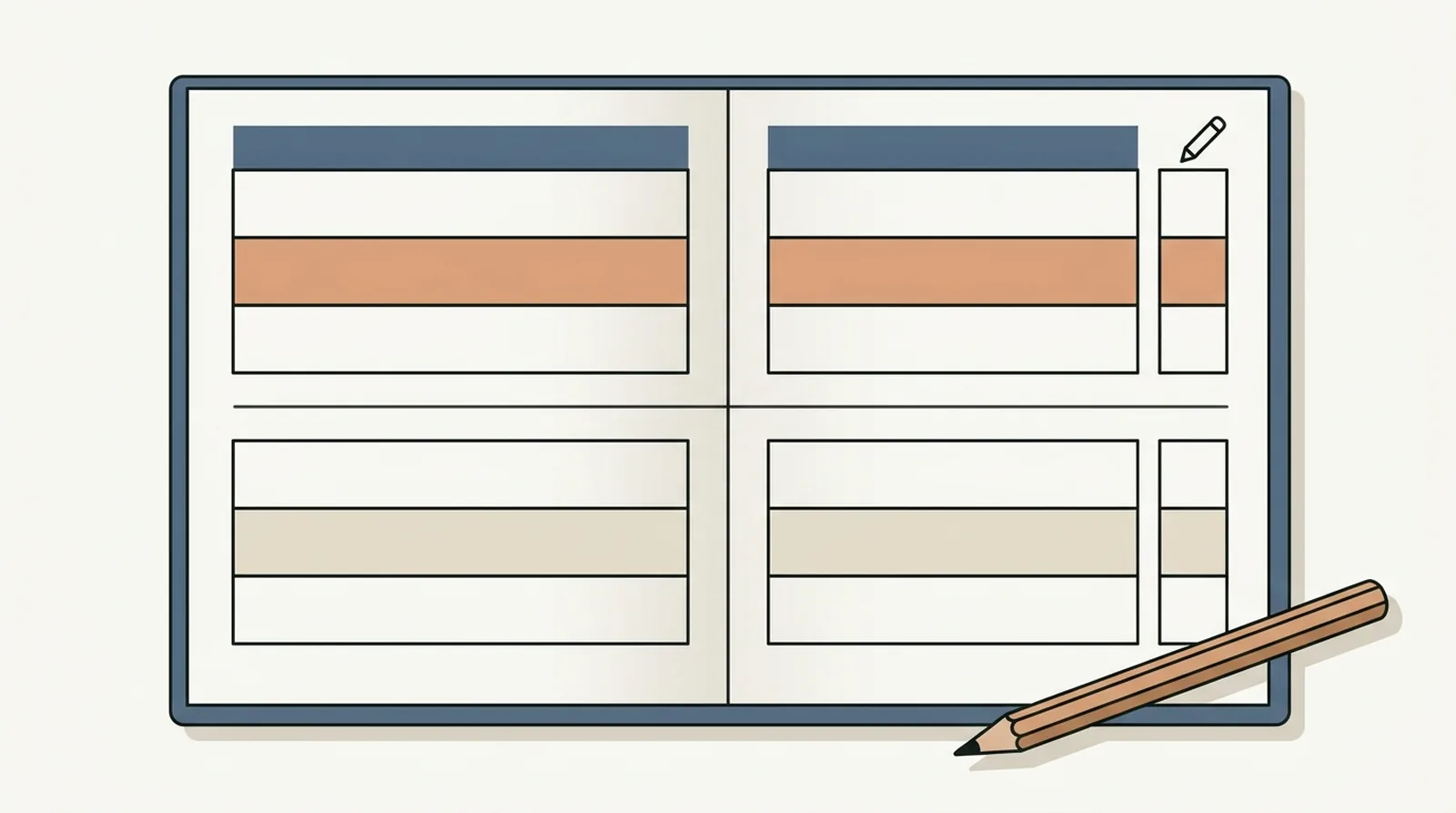
It should look like a short table with the same columns every visit. Consider a fictional beginner who trains twice in the first week. The numbers are made up to show the arithmetic, and they are not a suggested starting weight.
| Date | Exercise | Setting or weight | Set 1 | Set 2 | Set 3 | Note | |---|---|---|---|---:|---:|---:|---| | Mon 2 Nov | Leg press | 40 kg | 10 | 10 | 8 | Last set slowed down | | Mon 2 Nov | Chest press | Seat 4, 15 kg | 12 | 10 | 10 | Seat 4 felt low | | Mon 2 Nov | Lat pulldown | 20 kg | 10 | 10 | 9 | | | Mon 2 Nov | Seated row | 15 kg | 12 | 12 | 12 | Try 17.5 kg next time | | Wed 4 Nov | Leg press | 40 kg | 12 | 12 | 10 | | | Wed 4 Nov | Chest press | Seat 5, 15 kg | 12 | 12 | 11 | Higher seat fixed the reach |
The row that says "try 17.5 kg next time" is the whole point. It is a note to your future self, written while the session is fresh. Two weeks of rows like that turn a vague memory into a decision: you either beat the number or you repeat it.
Keep the fields identical between visits. If the column order changes, the comparison breaks, and a spreadsheet sorts the columns into nonsense. A progressive overload tracker that compares two sessions shows the same idea with a last-time column, which removes the need to scroll back through the page.
What actually moves week two
Week two is decided by what you wrote in week one, not by what you planned. Three things do most of the work.
The weight and the setting. A machine's seat height changes the movement, so "15 kg" without "seat 4" is an incomplete entry. Record the setup beside the load, and the second visit starts where the first one ended.
The reps in the last set. The 2-for-2 rule reads the final set, because that is where fatigue shows. An entry that stops at the first set hides the one number the rule needs.
The note you leave yourself. One line about what felt wrong is worth more than a paragraph written from memory a week later. "Seat 4 felt low" is a fix you can apply; "chest press was hard" is not.
None of this requires an app or a subscription. A dated row and five columns hold it. If you already keep your weight and measurements somewhere, a tracker that keeps weigh-ins, measurements and workouts in one file saves you from holding two records in your head.
Why Trust This Article
We are the Ultimate Fitness Tracker team, the people who built the spreadsheet's Workout Planner. We read the three sources linked here on 20 November 2026 and kept each publisher's own wording and date beside its number. Gold's Gym gives a beginner routine and a frequency. Nerd Fitness gives a staged first visit. Skelcore gives the 2-for-2 definition.
The example table is arithmetic made from fictional entries. It does not report anyone's results and it does not prescribe a starting weight. This is a guide to recording a session, not a training programme. Check any guideline against its own page before you follow it, since gyms update their advice. Our about page says who publishes this site, and the editorial policy explains how we prepare and correct articles.
Where Ultimate Fitness Tracker Fits
Ultimate Fitness Tracker is a weight loss and workout spreadsheet with a Workout Planner tab. The tab records exercise, sets, reps, weight, time, distance and intensity, and shows what you lifted last time beside each exercise. It also holds your own exercise list, so the names you invent in week one stay spelled the same way in week twelve.
The rest of the file covers the other numbers a beginner collects. Weigh-ins carry a 7-day average, body measurements cover nine sites, and there are twelve dated progress-photo slots. It runs in Google Sheets and Excel, and the three printable pages include a weekly workout log for anyone who prefers paper at the rack.
Ultimate Fitness Tracker keeps the first week and every week after it in one file you own. The weight loss tracker template guide shows how the body-tracking tabs are laid out if you want to see them before you start.
Frequently asked questions
What should a beginner do at the gym on the first day?
Walk the room, warm up for five to ten minutes, and do a short full-body session with one movement for each pattern: a squat, a push, a vertical pull and a horizontal pull. Write down what you did. The first visit is a starting point for the record, not a test.
How many days a week should a beginner go to the gym?
Two or three sessions a week with a rest day between them is the range two gym guides give for beginners. Gold's Gym suggests training two to three times a week, and Nerd Fitness suggests working up to three times a week. Both describe a starting point, not a rule.
How many sets and reps should I do in week one?
Gold's Gym suggests three sets of eight to twelve reps for each movement in a full-body routine. That is one publisher's beginner template, not a universal prescription. Record the sets and reps you actually complete, which may be fewer.
What is the 2-2-2 rule at the gym?
The phrase names two different things. The 2-for-2 rule says add load when you beat your rep target by two reps on the last set in two sessions in a row. The 2-2-2 method is a recent training format of two full-body workouts a week, two working sets per exercise, and two reps left in reserve. A log records which one you follow.
Should I write down every set in my first week?
Write down every set you complete if you want to compare sessions later. If that feels like too much, record the exercise, the weight, and the reps of your best set. Keep the same fields every visit so the entries line up.
What if I do not know what the machines are called?
Use a name you will recognise next time, such as the row of the machine and the movement it does. Many gyms label each machine with a setup diagram. The name only has to work for you when you read the row again.
