Weight Fluctuation: Why the Scale Jumps 2 lb Overnight (and What to Track Instead)
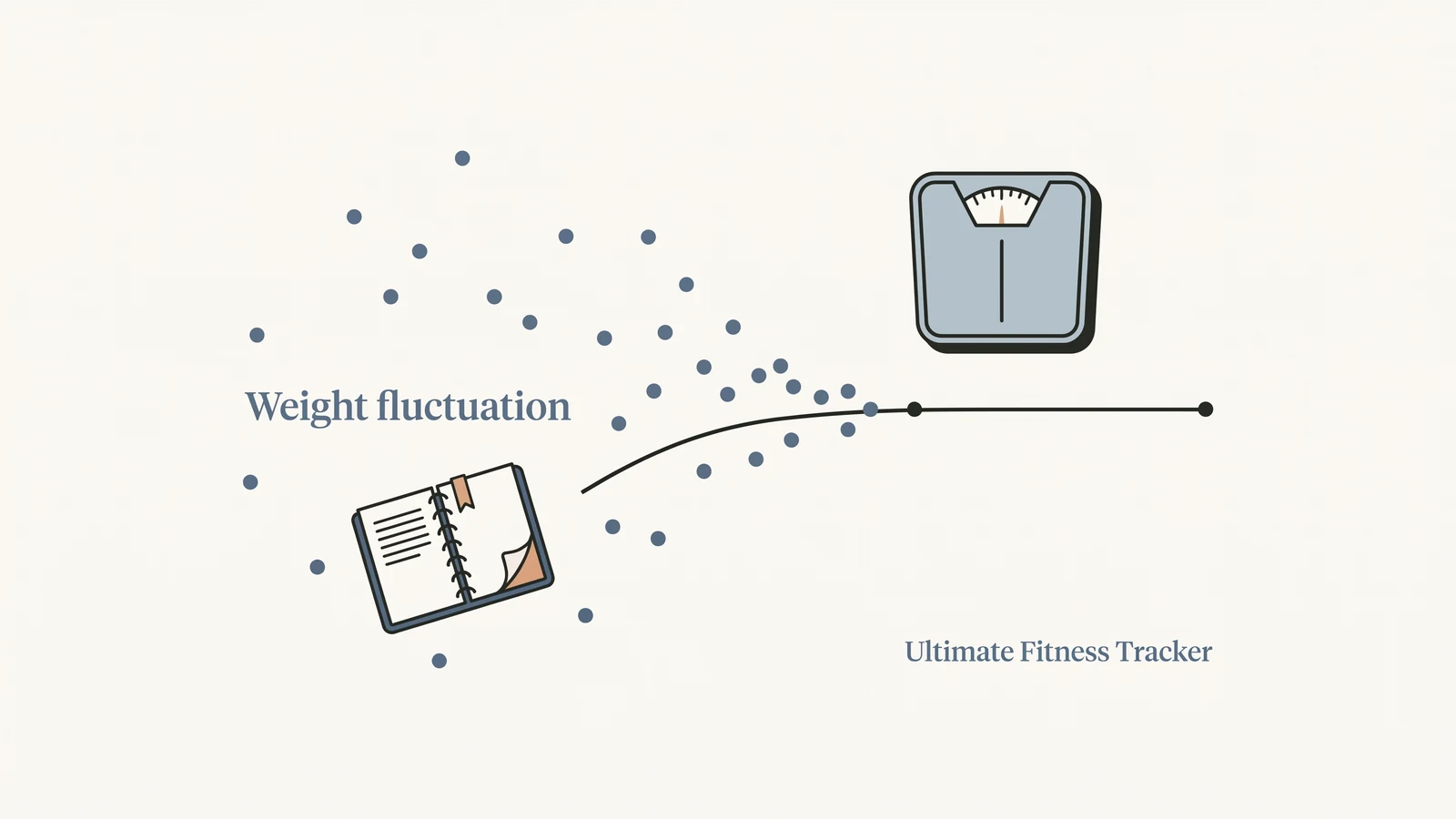
Weight fluctuation can reflect water, food, timing and other short-term changes. A seven-day average summarizes readings without explaining their cause.
By Ultimate Fitness Tracker by Cosmo Suite · Editorial policy
Published · 6 min read
General information, not medical or fitness advice. Talk to a qualified professional.
Weight fluctuation is a short-term change in a recorded body-weight value. Fluid retention, food and drink moving through digestion, hormones, activity and routine changes can contribute (Cleveland Clinic, 26 July 2024). One reading records a number. It cannot show which factor, if any, explains it.
A daily reading is one measurement recorded at a particular time. Compare it with other dated readings only as a record of those values, not as an explanation of cause.
Keep each number beside its date. A seven-reading average is the arithmetic mean of seven recorded values. It describes those readings; it cannot explain a change or predict what comes next. If weighing feels uncomfortable, you can choose a different schedule or skip it.
The Trend Line:
- A single reading records one moment. It does not explain the cause of a change.
- A seven-reading average summarizes the seven values you choose to include.
- Keep dates and units attached to each value. Leave a missed reading blank.
- Optional notes can describe context, such as a different time of day. They cannot establish a cause.
What the Numbers Say
Each field in a weight log has a separate job. A dated reading captures one measurement, while an average summarizes the entries included in its calculation.
| Record | What it can show | What it cannot tell you alone |
|---|---|---|
| One weigh-in | The scale reading at that time | Why the number changed |
| Seven recorded readings | A set of values to summarize | A diagnosis or future result |
| Seven-reading average | The arithmetic mean of those seven values | What caused a change in the mean |
| Date and unit | When and how the value was recorded | Whether two readings had the same conditions |
| Optional note | A detail you chose to remember | Proof that the detail caused the reading |
| Measurements, photos or workouts | Separate records over time | A medical conclusion |
When a new reading stands out from the rest of the week, the dates and other values give it context. The weight-loss tracker spreadsheet guide shows a wider record with a trend beside weigh-ins.
If you keep this in a spreadsheet, a weight tracker that puts a seven-reading average next to each weigh-in can keep both values together.

Why Can a Daily Reading Move?
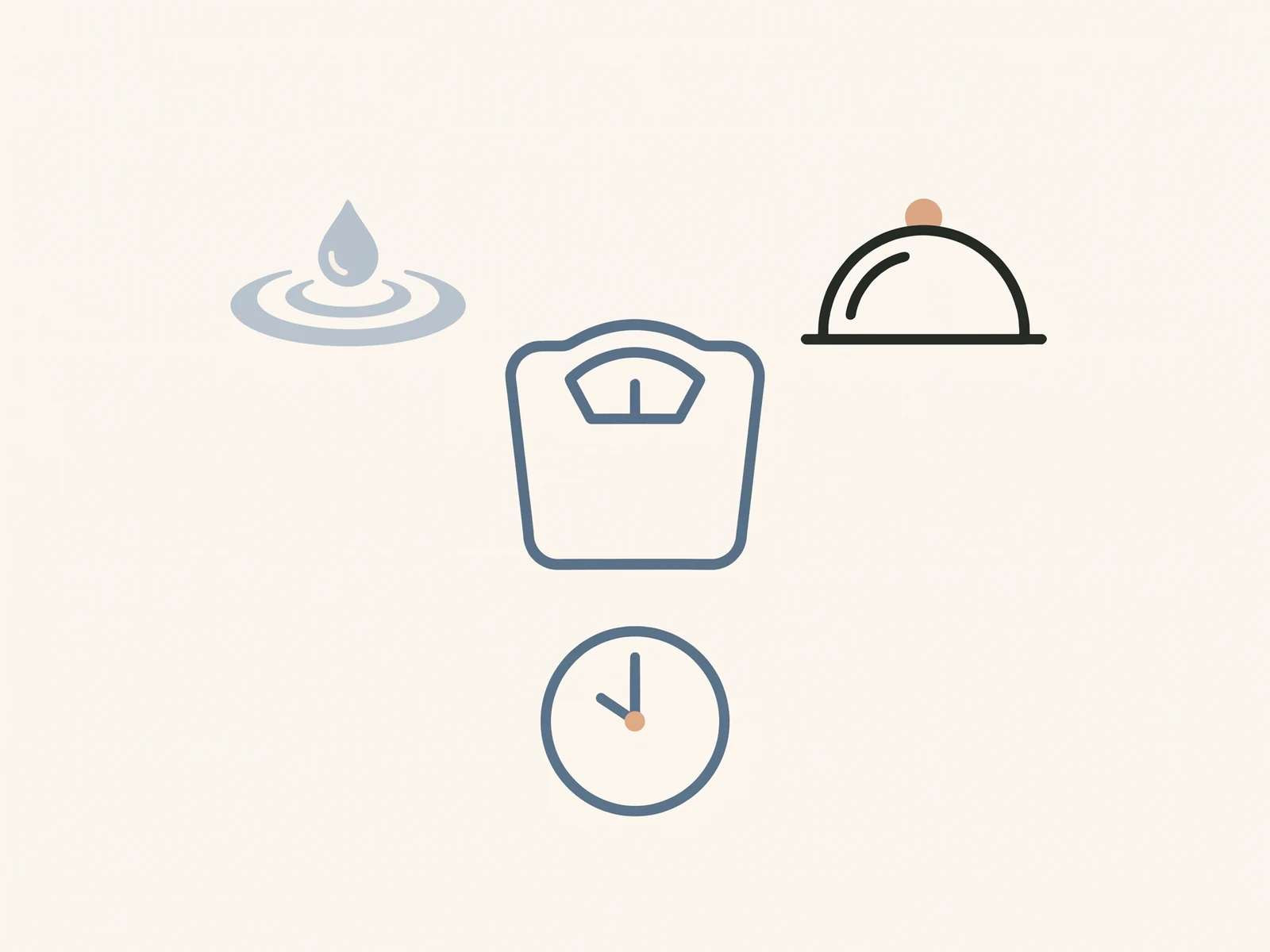
Short-term readings can change for several reasons, and a scale does not label the reason. Cleveland Clinic lists factors such as fluid retention, food and digestion, hormones, physical activity, medication and routine changes. Its article also says people vary, so its general examples cannot explain an individual reading.
The NIH-hosted critical review describes daily variation in measured weight from body water, glycogen and digestive-tract contents. It notes that graphing repeated measurements can reveal a pattern over time. The review examines self-weighing research; it does not set a target or say how often a particular person should weigh.
The NHS England page gives a practical measurement point: keep the time of measurement consistent, preferably in the morning, and use regular weekly-to-monthly intervals. That is general recording guidance. Your clinician may give different instructions for a health reason.
How to Calculate a Seven-Reading Average
Add the seven readings in the chosen set, then divide the total by seven. Label the result with the same unit as the entries. This is a summary of those values, not an estimate of fat, health or future weight.
The table is fictional example data in kilograms. The first seven readings total 576.4 kg, so 576.4 ÷ 7 = 82.34 kg. A later reading rises by 0.9 kg, about 2.0 lb, from the day before. The seven-reading average moves from 82.34 to 82.44 kg. By day 14, the latest seven readings total 576.7 kg, so 576.7 ÷ 7 = 82.39 kg. The values show arithmetic only, not typical results.
| Day | Daily reading (kg) | Rolling seven-reading average (kg) |
|---|---|---|
| 1 | 82.4 | |
| 2 | 82.1 | |
| 3 | 82.8 | |
| 4 | 82.6 | |
| 5 | 82.3 | |
| 6 | 82.0 | |
| 7 | 82.2 | 82.34 |
| 8 | 83.1 | 82.44 |
| 9 | 82.7 | 82.53 |
| 10 | 82.4 | 82.47 |
| 11 | 82.5 | 82.46 |
| 12 | 82.1 | 82.43 |
| 13 | 81.9 | 82.41 |
| 14 | 82.0 | 82.39 |
Day 8 sits 0.9 kg above day 7, about 2.0 lb. Its rolling average is 82.44 kg, up 0.10 kg from the day-7 average. By day 14, the latest seven readings average 82.39 kg, around 0.04 kg above the first seven. Those values show how the calculation behaves; they do not explain what caused the increase.
For a rolling average, select the latest seven recorded values each time a new entry is added. Write down which dates are included, especially if you use a different weighing schedule. A block of seven entries and seven consecutive calendar days are only the same when each day has a recorded value.
A weight tracker spreadsheet with a seven-day average beside each entry can do this calculation while keeping the dates visible.
What Belongs Beside a Reading?
Start with the date, number and unit. The NHS guidance recommends consistent timing for comparisons. If your time or routine changes, the date still keeps the entry in order, and a brief note can remind you what was different.
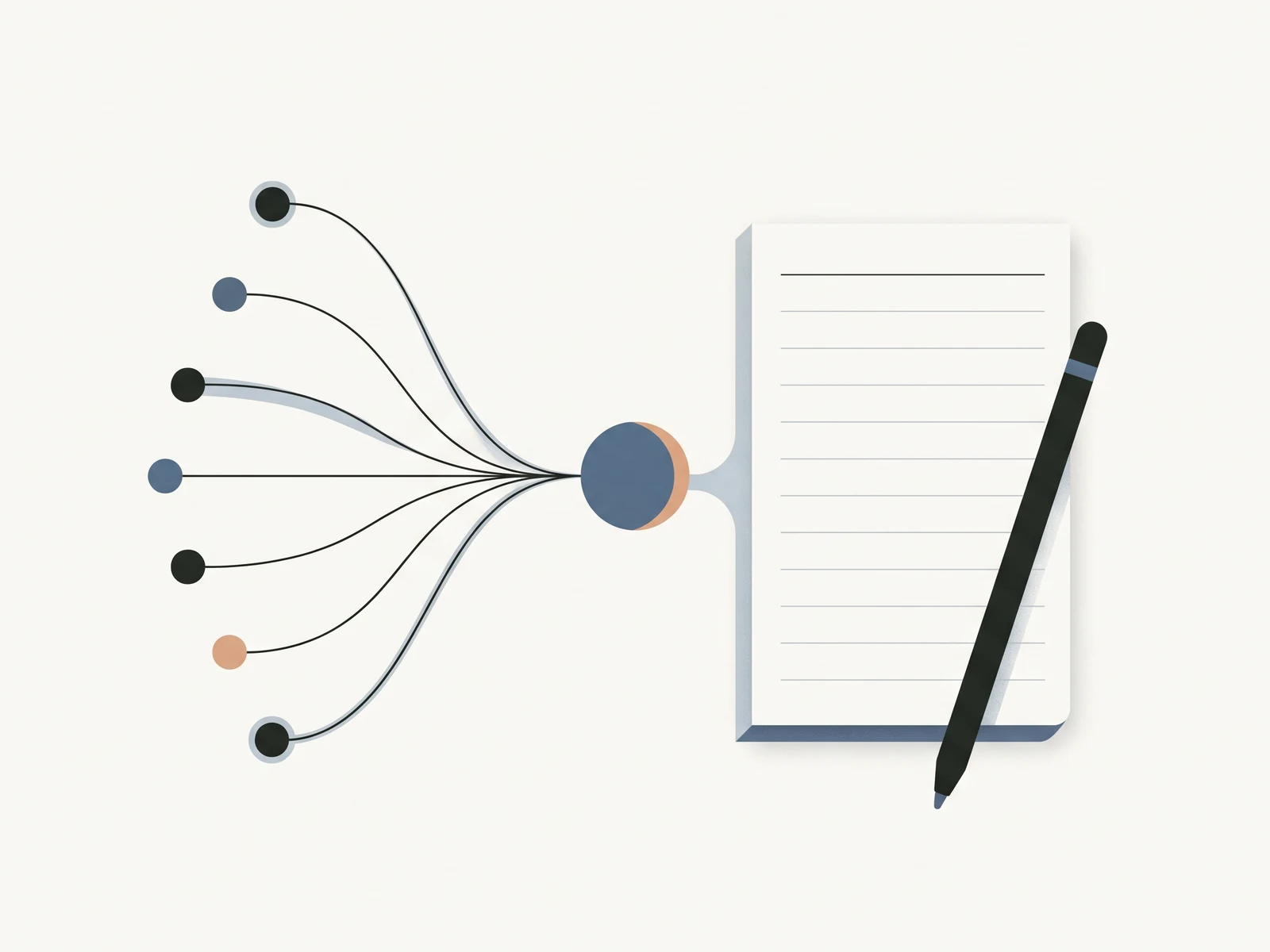
Notes are optional. You might record a travel day, a later weigh-in or another detail you want to remember. A note can describe what happened, such as “weighed after breakfast.” It cannot establish a cause. Cleveland Clinic lists several possible influences, and the reading does not distinguish among them.
Keep personal notes brief and private. There is no need to record meals, medication or anything else you do not want in the file. You can also leave notes out and keep the date, value and unit. The weight tracker template checklist covers fields that can keep a record readable.

What Should Happen When a Reading Is Missing?
Leave the date without a value, then add the next reading on its own date. A blank preserves the fact that no measurement was recorded. Entering zero or copying a nearby number would change the record.
If you calculate a mean from seven entries, state which seven readings it uses. If a week contains fewer entries, it is a different-sized set. Keep the count visible and avoid comparing it as though it used the same dates and number of readings.
Use the same care when units change. Convert consistently before combining values, or keep the sets separate. Ultimate Fitness Tracker supports kg, lb or stone plus lb for body-weight entries, according to its product contents. A unit label beside each number helps prevent a mix-up.
What Else Can You Record?
Measurements, progress photos and workouts are separate records that may help you keep track of details the scale does not contain. They answer different questions, so do not merge them into one score or use them to make a medical judgment.
For example, a workout entry can preserve the exercise, sets, reps and what you lifted last time. A measurement entry can keep a dated number, while a photo slot can preserve an image from a chosen date. Those records describe what you logged. They cannot establish what caused a change in body weight.
The decision to keep any of these records is yours. If a measurement routine adds pressure, remove it. A file can stay useful with only the information you want to review.

Why Trust This Article
The Cosmo Suite team built the Ultimate Fitness Tracker template. This article uses Cleveland Clinic’s 26 July 2024 explanation of short-term fluctuation, a critical review hosted by the National Library of Medicine, and NHS England’s 1 December 2023 recording guidance. We checked these sources on 6 November 2026. The example readings are fictional and used only to show arithmetic. This is about tracking, not medical advice. Talk to a doctor about your health.
Where Ultimate Fitness Tracker Fits
If you want the calculations in the same file as your other records, Ultimate Fitness Tracker is a weight loss and workout spreadsheet. It includes weigh-ins with a 7-day average, measurements and photos, plus a workout log with what you lifted last time. The tracker works in Google Sheets and Excel, with both included.
The spreadsheet details and included tabs describe the file before you decide whether it fits. Its 7-day average summarizes recorded readings. It cannot identify why a weight changed or promise a result. You can also keep the method in a sheet you already use.
Frequently asked questions
Why can weight change from one morning to the next?
Water retention, food and drink moving through digestion, hormones, activity and routine changes can affect a reading. Cleveland Clinic describes several of these short-term factors. One measurement cannot identify which factor was involved.
How do I calculate a seven-day average?
Add seven recorded readings and divide by seven. For example, readings that total 576.4 kg have an average of 82.34 kg. Keep the dates and units beside the result, and label example data clearly.
Does an overnight change show a change in body fat?
One reading cannot show what caused a change. A research review describes daily variation in water, glycogen and digestive-tract contents, and says repeated readings can show a pattern. It does not predict what any one reading means for you.
Do I need to weigh myself every day?
No. NHS England guidance describes consistent measurements at regular weekly-to-monthly intervals. Choose a frequency that feels appropriate for you. If weighing causes distress, talk with a qualified professional about what support fits.
What should I write beside a weigh-in?
Keep the date, reading and unit together. If it helps you understand your own record, add a brief optional note such as a different weigh-in time or travel. A note is context, not proof of a cause.
What else can I track when the scale reading is similar?
You can keep separate records of measurements, progress photos or workouts if those records are useful to you. They describe different things. They do not diagnose a condition or guarantee a particular result.
Sources
Keep reading
Weight Loss Tracking
Weight Loss Tracker Spreadsheet: Track the Trend, Inches and Workouts in One File
Weight loss tracker spreadsheet template: the 7 fields it needs, the 7-day average formula, and a 14-day worked example for Google Sheets and Excel.
· 7 min read
Weight Loss Tracking
Weight Loss Tracker Template: What a Good One Tracks Besides the Scale
Weight loss tracker template checklist: 7 fields a good one needs, scored across printable, Notion and spreadsheet formats, with a worked example log.
· 7 min read
Weight Loss Tracking
Printable Weight Loss Tracker: When Paper Works and When You Need the Math
Printable weight loss tracker guide: compare a paper weigh-in page with a spreadsheet, then work through a 7-day average and change since start.
· 8 min read
